Your cart
There are no more items in your cart
Rug Size Guide: How to Choose the Right Rug for Every Room
-
Categories :
Bedroom
, Dining Room
, Living Room












.
.

.

.
.
.
A rug can either pull a room together or make it feel slightly off, and size is usually the reason why. This rug size guide shows you how to measure, which sizes suit which rooms, and how to place a rug so your furniture looks like it belongs together.
Browse our indoor rugs as you read, or our patio rugs if the space you're dressing is outdoors. Along the way, we've picked six rugs from our range that show each size at its best.
Rug sizes vary from design to design, so always check the exact length and width on the product page. As a general guide:
• Runners: long and narrow, around 0.8 m wide and up to about 3 m long, for passages, entrances and the space beside a bed
• Round rugs: usually 1.5 to 2 m across, for reading corners, entrance halls and round dining tables
• Medium rugs: roughly 2.3 x 1.6 m, for smaller lounges, bedrooms and studies
• Large rugs: from about 3 x 2 m, for most living rooms and dining settings
• Extra-large rugs: 3 x 2.5 m and up, for open-plan spaces and corner couches
When in doubt, size up. A rug that's too small is the most common mistake, and it makes furniture look as if it's floating rather than grouped together.
Measuring takes ten minutes and saves you from a rug that never quite looks right.
Decide which area the rug should define: the seating group, the dining set or the bed. Measure that zone, not the whole floor.
In most rooms, leave around 30 to 45 cm of bare floor between the rug and the walls. That border frames the rug and keeps the room feeling open.
Use painter's tape to mark the rug's outline on the floor. Walk around it and sit on the couch. If the tape cuts through the middle of your furniture, you need a bigger rug.
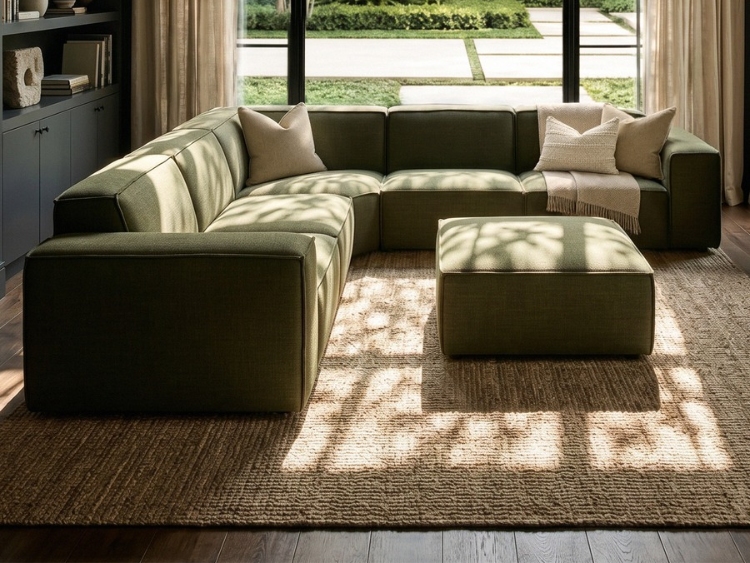
In the lounge, the rug's job is to connect the couch, chairs and coffee table into one conversation zone. There are three ways to place it:
• All legs on: every piece of furniture sits fully on the rug, which suits large and open-plan lounges
• Front legs on: the front legs of the couch and chairs rest on the rug, the most popular and flexible option
• Coffee table only: a smaller rug under the coffee table alone, best kept for very compact spaces
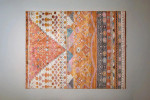
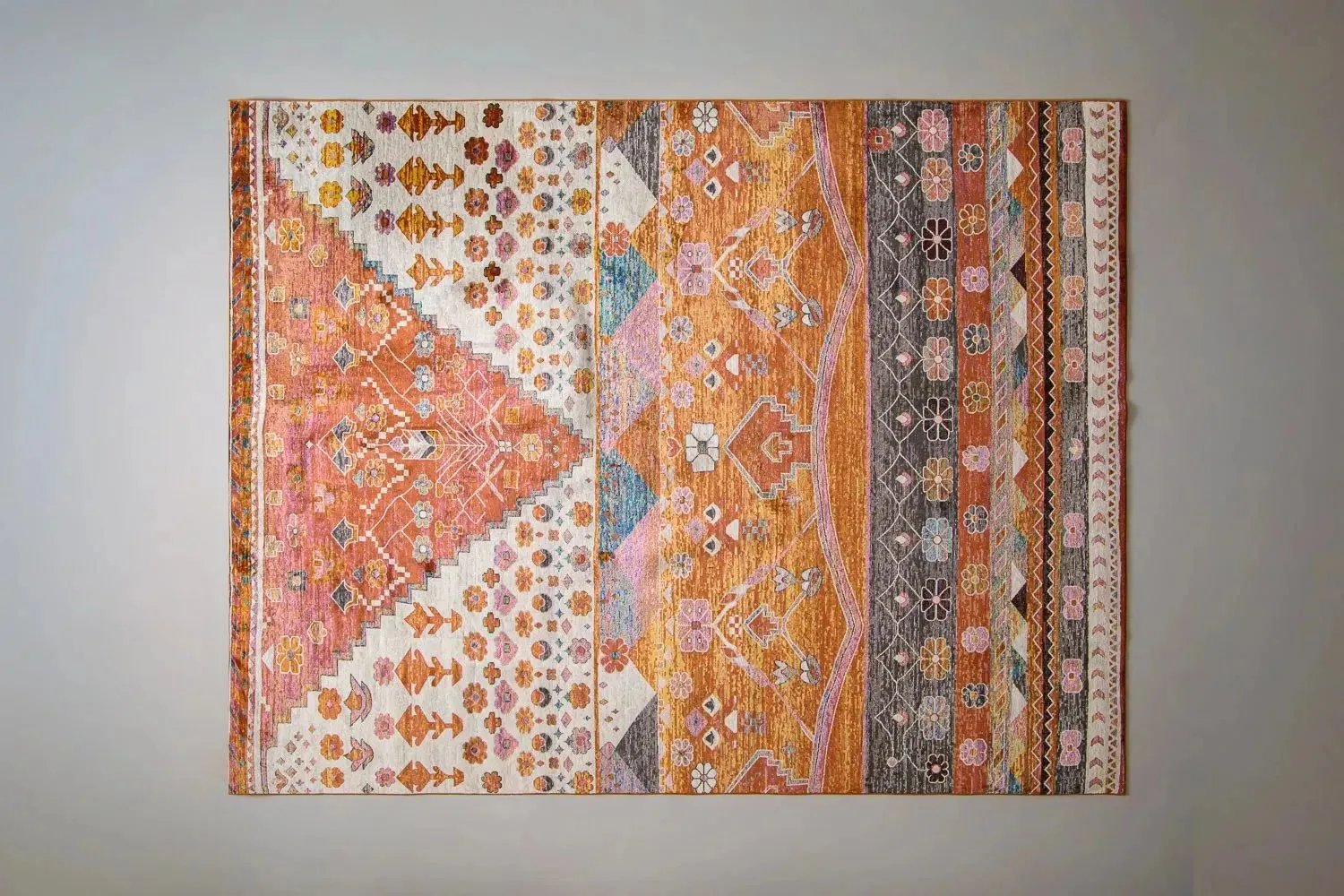
For open-plan homes and corner couches, think big. The Batu Rug - Large measures 4,000 x 3,000 mm, enough to anchor a full seating group. Woven in Turkey, it pairs a kilim-inspired pattern in terracotta, saffron, charcoal and ivory with a low-profile, easy-care weave that feels soft underfoot.
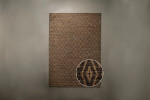
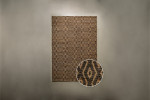
For an average family lounge with a 3-seater and a pair of armchairs, a rug of around 3 x 2.5 m gives the front legs plenty of room. The Kisumu Rug - Large measures 3,170 x 2,500 mm in hand-woven jute and cotton, with natural and black tones that help hide everyday dust. It also comes as the Kisumu Rug - Medium at 2,270 x 1,600 mm for smaller rooms.
Featured Product: Batu Rug - Large
Under a dining table, the rug should extend at least 60 cm beyond the table on every side. That way, chairs stay on the rug when they're pulled out and don't catch on the edge.
• Measure the table, then add 60 cm on each side
• Match the shape: rectangular rugs for rectangular tables, round rugs for round tables
• Choose a low, flat weave so chairs slide easily
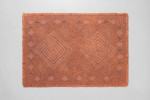
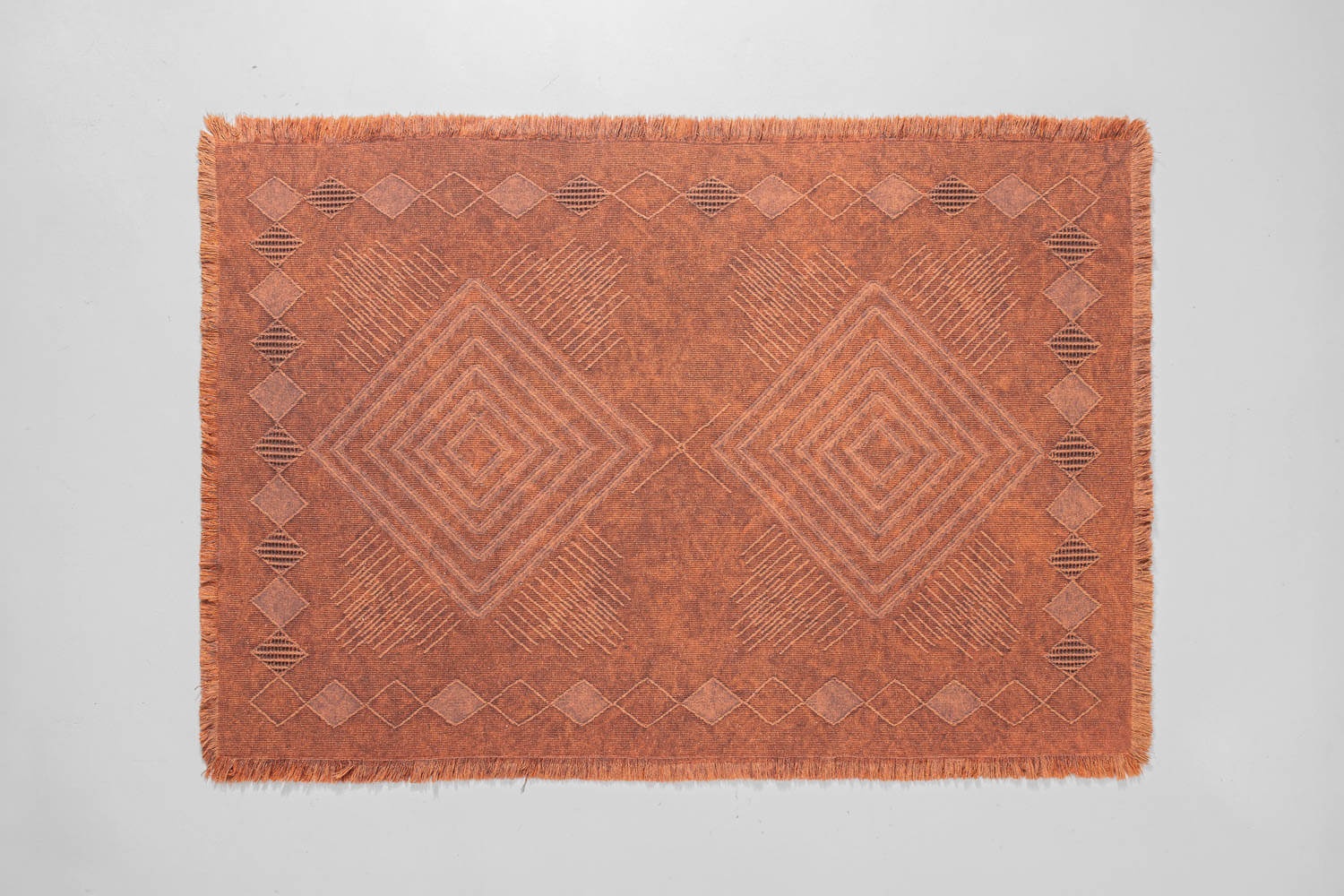
The Khaya Rug - Large brings warmth to the table at 3,000 x 2,000 mm. This Turkish-made cotton kilim comes in a rich terracotta with antique-inspired detailing and decorative tassels, and its flat weave makes it a natural fit under a dining set.
Featured Product: Khaya Rug - Large
In the bedroom, a rug should give your feet a soft landing the moment you wake up. Place a large rug crosswise under the bottom two-thirds of the bed, leaving the bedside tables on the bare floor, so it extends about 45 to 60 cm on either side.
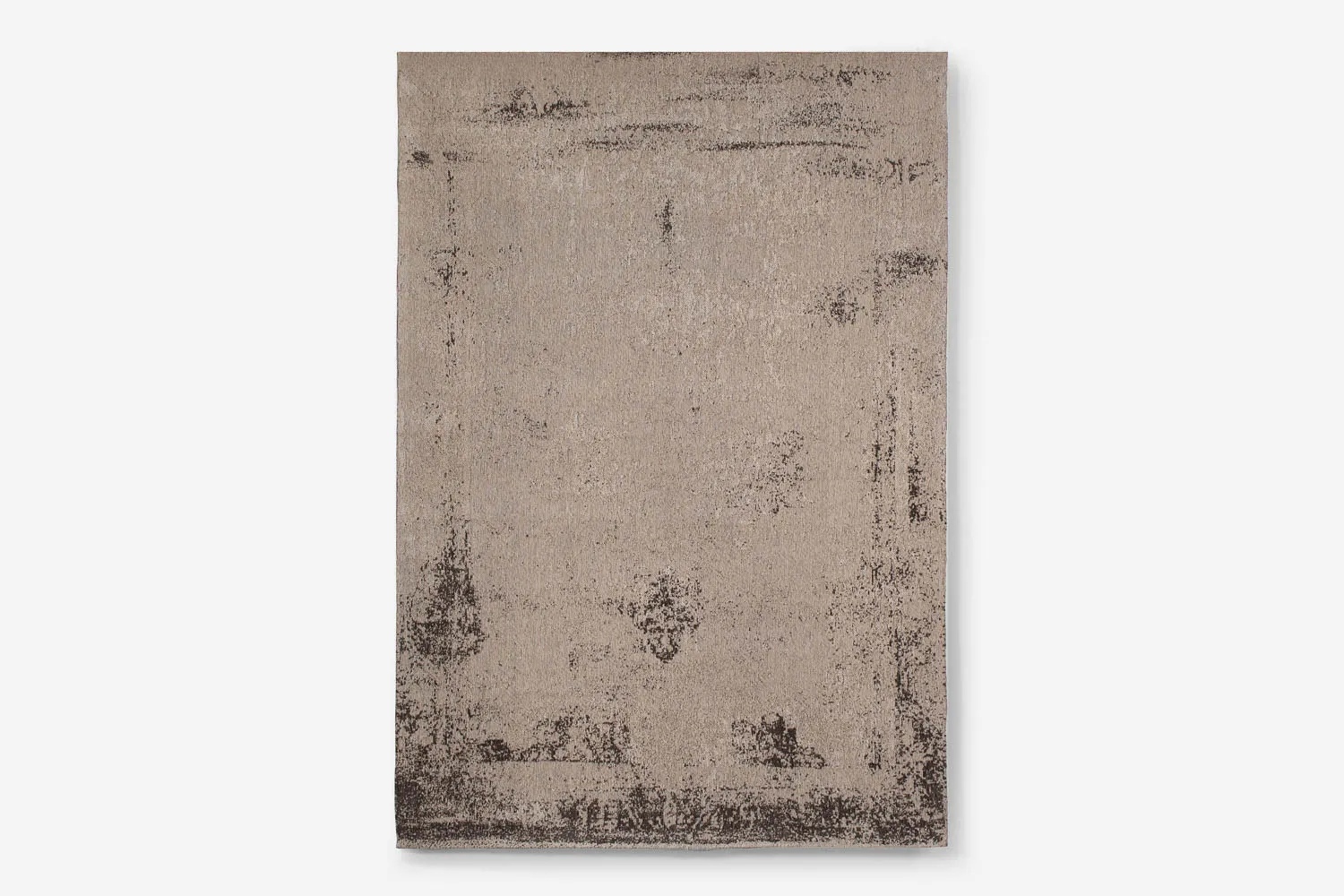
For smaller bedrooms, a medium rug at the foot of the bed works well. The Tabitha Rug - M - Antracite measures 2,300 x 1,600 mm. It's hand-woven and hand-stitched with an antique-effect abstract design, and its stain- and fade-resistant surface is easy to keep looking its best.
Featured Product: Tabitha Rug - M - Antracite
A round rug softens a room full of straight lines and marks out a small zone without crowding it. Place one under an armchair and side table to create a reading nook, or in an entrance hall to welcome guests.
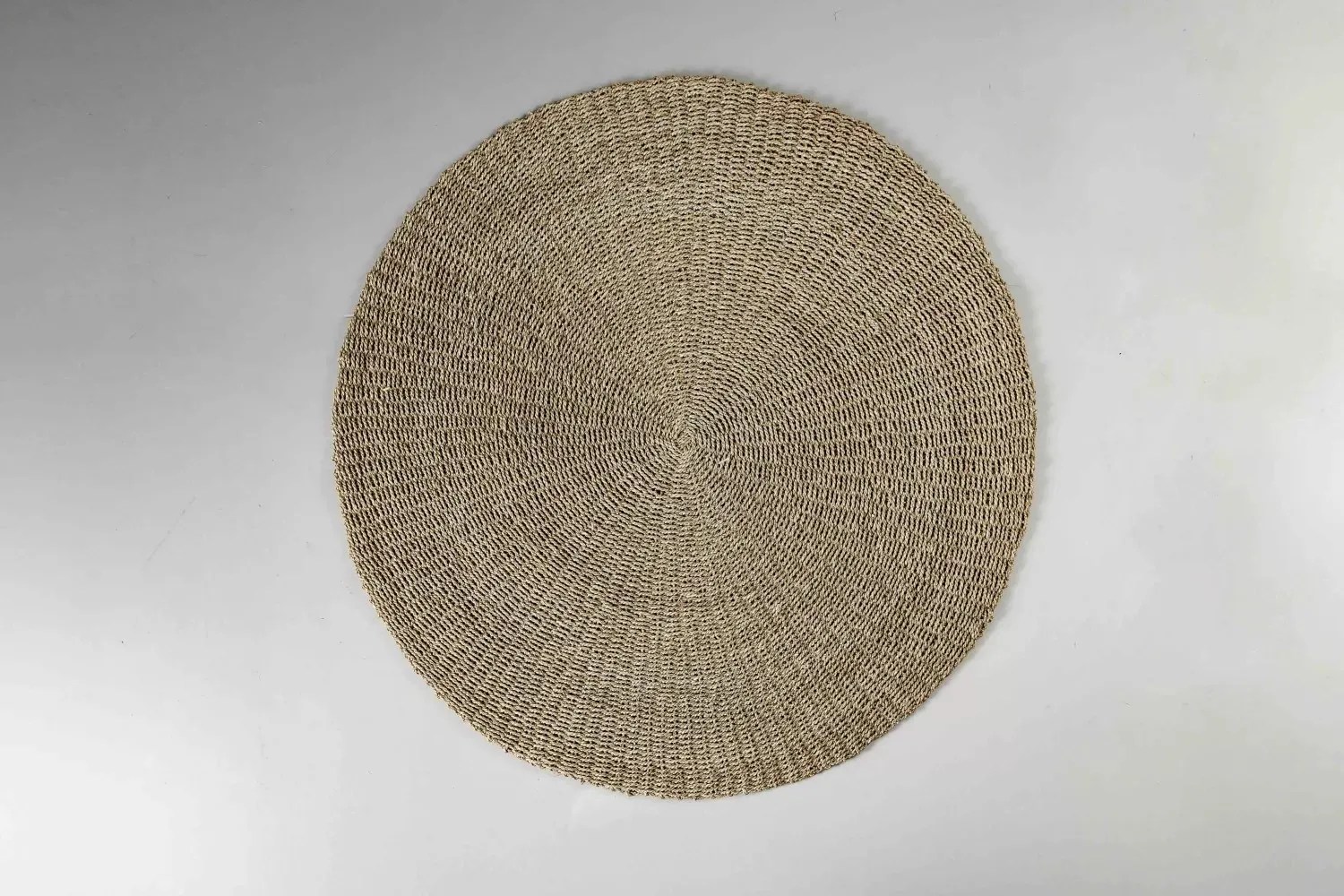
The Odina Rug measures 1,500 x 1,500 mm and is hand-woven from natural pandan twine in a rippled, textured pattern. Its natural tone sits comfortably with almost any interior.
Featured Product: Odina Rug
A runner should leave about 10 to 15 cm of floor on each side and stop short of doorways so doors open freely. In a kitchen, run it along the counter where you stand most.
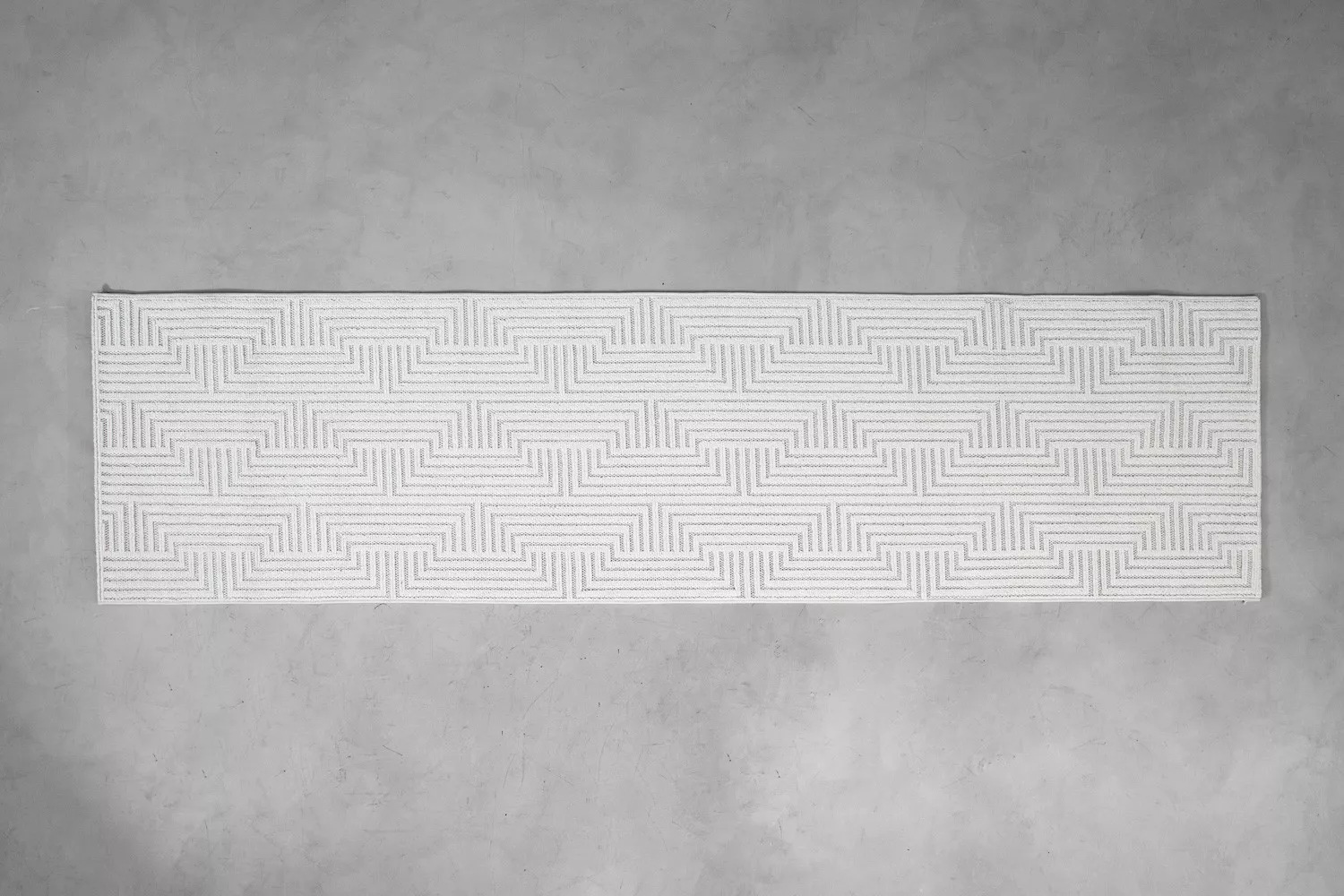
The Léfa Runner measures 3,010 x 800 mm. Made in Turkey with a hard-wearing woven polyester, it pairs soft, creamy tones with abstract detailing, and it's just as at home at the foot of a bed as it is down a passage.
Featured Product: Léfa Runner
• Size up when you're unsure; a slightly large rug looks better than a small one
• Keep at least the front legs of your seating on the rug
• Leave a border of bare floor around the edges of the room
• Use layers: a smaller patterned rug over a larger plain one adds depth
• Choose hard-wearing, easy-care weaves for busy areas and homes with pets
The right rug makes every other piece look more considered. Explore our rug collection online, or bring your measurements into a store and find the size that completes your space.