Your cart
There are no more items in your cart
.jpg)
Trundle beds - Not just for kids!














.
.

.

.
.
.
If you’ve been looking for a smart sleep solution to: a) maximise space, b) save your poor sofa from being rigged up as a makeshift bed-come-pillow fort, and c) avoid the postural perils of sleeping on a blow-up mattress...a trundle bed may just be the sleep saviour you’ve been looking for!
Of course, there are a number of different types of space-saving beds to consider besides the usual fall-backs. But without a doubt, trundle beds are one of the most comfortable, efficient and versatile solutions in the mix. And if you thought trundle beds were just for kids’ rooms—think again. (Sorry, kiddos!)
In this guide, we’ll be covering all your questions around trundle beds, including the different types available, all you need to know about mattresses and dimensions, along with all the pros and cons of trundle beds, so you’ll have no more doubts about whether the ‘trundle bundle’ is the right choice for you.
So, first things first…
Everyone loves a good 2-for-1 deal, right?
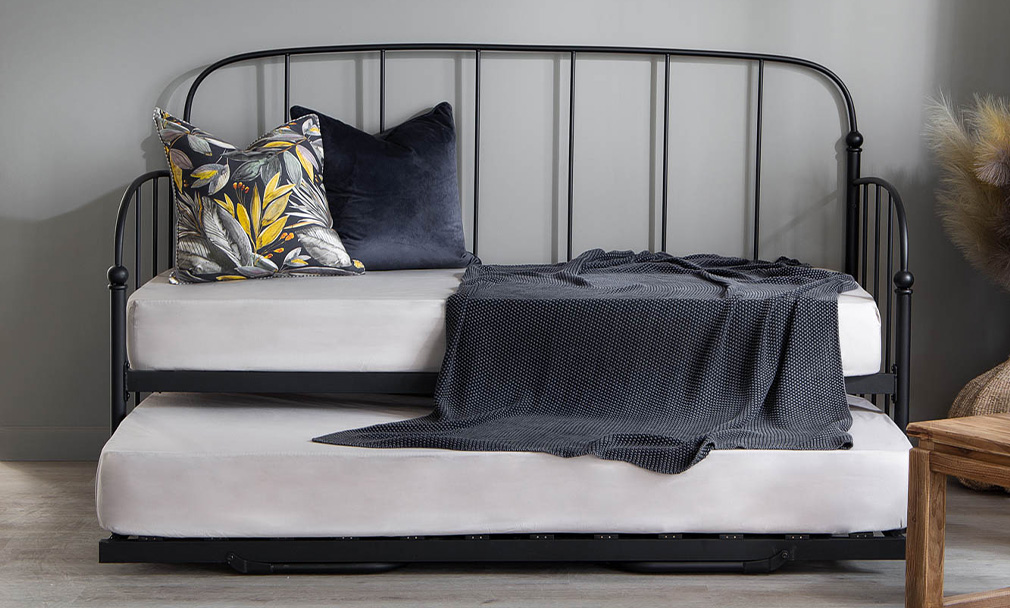
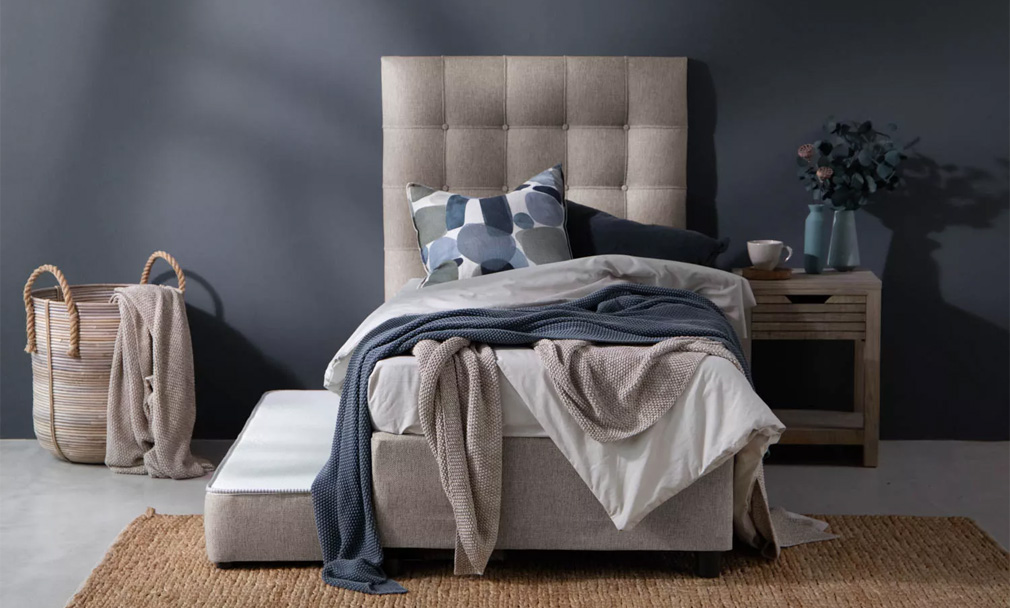
A trundle bed essentially gives you two beds for the floorspace of one.
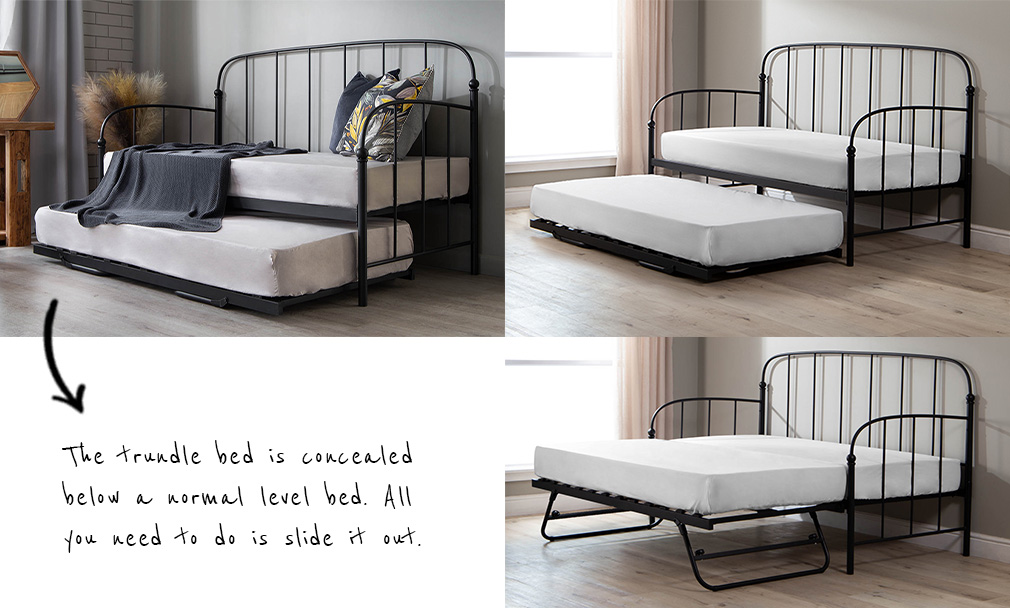
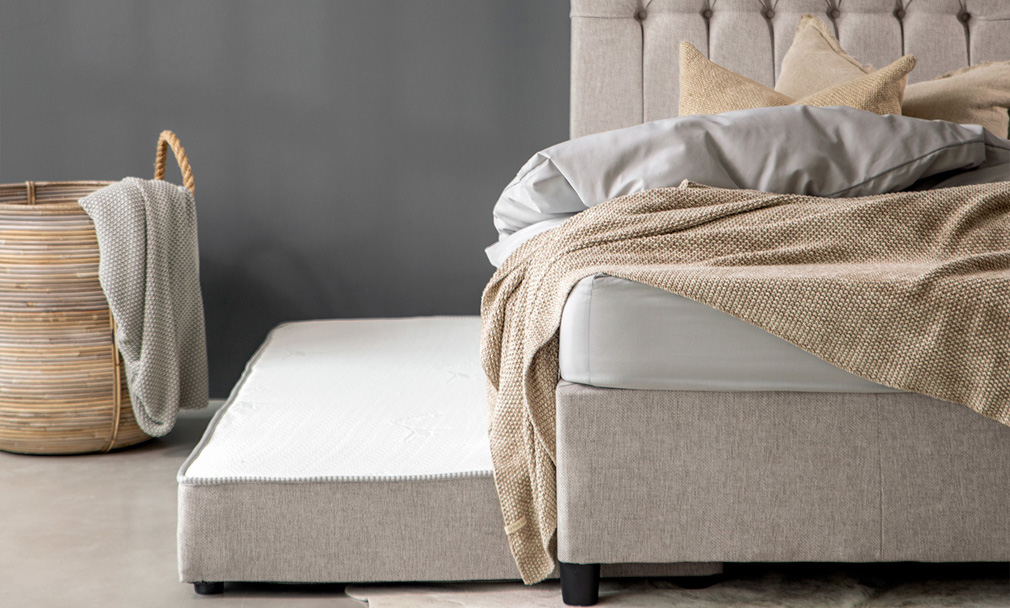
Unlike the bunk bed concept which adds a bed above, the trundle bed is concealed below a normal level bed. All you need to do is slide it out (usually on a set of rollers or casters) when you need the extra sleeping space, add your bedding and pillows, and it’s good to go.
The rest of the time, it stays neatly out of sight, out of the way. Some designs even include storage drawers for your bedding when the trundle’s not in use (less clutter! Huzzah!).
With the rising popularity of dual-purpose furniture, it’s no wonder that trundle beds have become popular for many different applications:
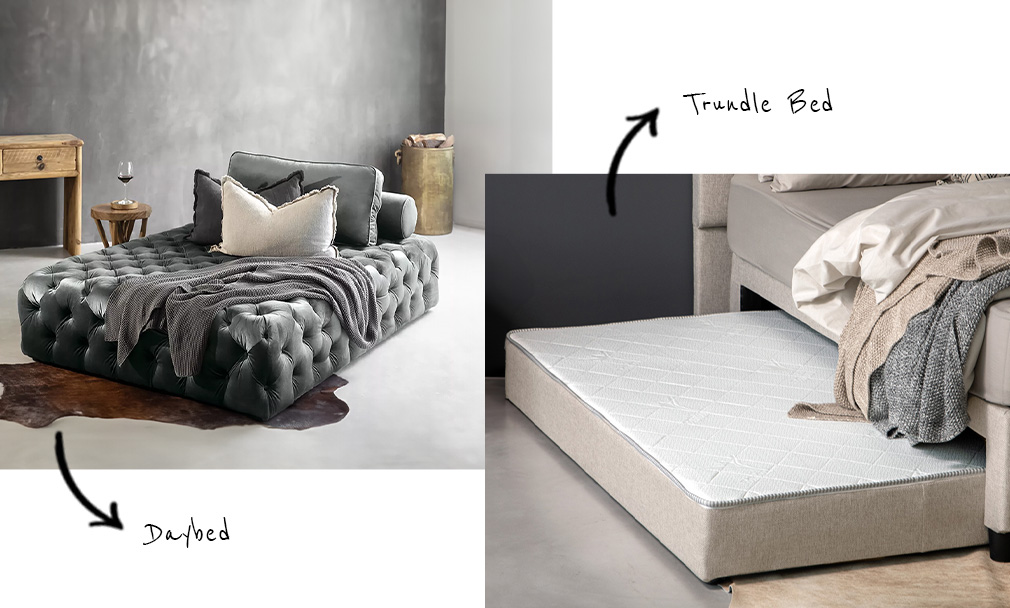
There tends to be a little confusion between daybeds and trundle beds, since they’re pretty similar. But there are a few key differences.
A daybed is a dual-function furniture piece that can be used as both a bed and a couch. Its design features three sides, similar to a sofa, except that the armrests are replaced by a frame acting as a headboard and footboard, while the long back end still functions as a backrest. Unlike a couch, however, the base supports a proper mattress.
A daybed can include a trundle bed underneath, but this is not an essential feature. Since it’s meant to function as a couch, a daybed will typically be no larger than a single size bed (since it’s difficult to sit comfortably on a very deep couch).
A trundle bed is obviously meant to function primarily as a bed. While a daybed is placed horizontally along a wall, a trundle bed—just like a normal bed—will usually be placed perpendicular to the wall. A trundle bed also comes in a wider range of sizes, as we’ll discuss in more detail below.
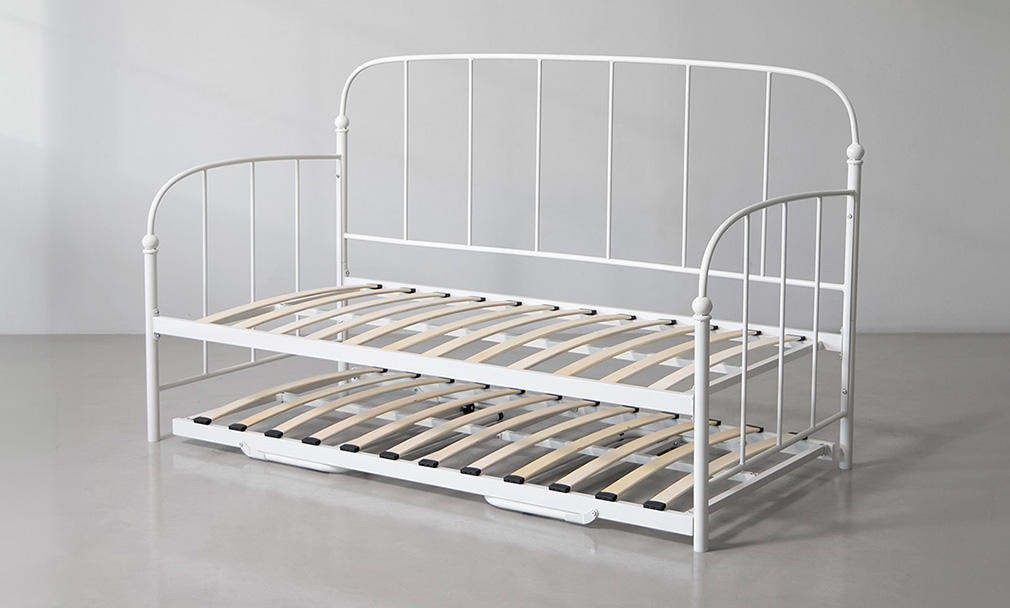
Trundle beds, like any furniture, come in a range of designs. The main differences come down to the construction and mechanics of the lower trundle section.
Trundles can also be sold separately as an add-on to existing (compatible) beds and daybeds, or incorporated into a complete trundle bed unit—or as we like to call it, a ‘trundle bundle’ (not the official terminology).
Here are 7 common types of trundle bed designs you can choose from to best suit your needs and preferences:
Space-saving sleep solutions have gotten a bit of a bad rap when it comes to comfort. And it stands to reason that you may have to compromise at least a little on comfort when you’re trying to double up on functionality and cut down on space. But that doesn’t mean you have to settle for spinal-torture-of-gran’s-old-sleeper-couch comfort levels.
The important thing is the quality of the mattress, since that’s the biggest factor in sleep comfort. Many trundle beds come with both mattresses included, while some setups will give you the freedom to choose your own. The mattress on the upper bed doesn’t have any special requirements, so can be any kind you prefer.
With the lower trundle mattress, there are two main limitations on your choices:
For these reasons, foam mattresses are generally the go-to for trundle beds. Today, there are plenty of highly supportive and comfortable memory foam, latex and pure foam mattresses available.
While you ideally won’t want to be sleeping on a trundle bed every night, there’s no reason it can’t offer a comfortable sleep solution when you need it, as long as you’ve chosen a quality product.
Just like bunk beds, there are some strong practical reasons for why trundle beds make a lot of sense for kids’ rooms—and that’s probably why there’s such a strong association there.
But that doesn’t mean they can’t offer a workable solution for most adult-sized guests too.
There are certainly some limitations with trundle beds, such as weight capacity and mattress dimensions (we’ll look at these in more detail below)—so you may need to look at other options for your giant uncle Ned.
Aside from the space issues, a bed that’s less supportive than a traditional mattress and right on the ground may not be suited to an elderly guest or someone with mobility issues. However, a pop-up trundle can still offer a practical and comfortable space-saving option if you’re having the grandparents over.
Since they don’t have a robust box spring or platform foundation, trundle beds can’t support quite as much weight as standard beds. Typically, you’re looking at a weight limit of around 110kg for a trundle bed. This obviously puts a limit on who can use the trundle, how many people can sleep on it—or how many kids can use it as a trampoline—at once.
Since a trundle bed has to stow away underneath the top bed, the mattress is usually smaller than the top one. In general, aside from having your trundle bed custom made, the largest mattress used for a trundle is three-quarter size. This could potentially sleep an adult plus a child, but would be a bit cramped for two adults. The majority of trundle beds feature a single or twin size mattress, sleeping one adult or child.
The great thing about trundle beds from a space-saving perspective is that you only need floor space for the trundle when it’s actually in use, meaning you can use the extra space during the day. If you have a really small guest room, you can probably get away with sacrificing on walking space when the trundle is extended—granted your guests can still get to the loo!
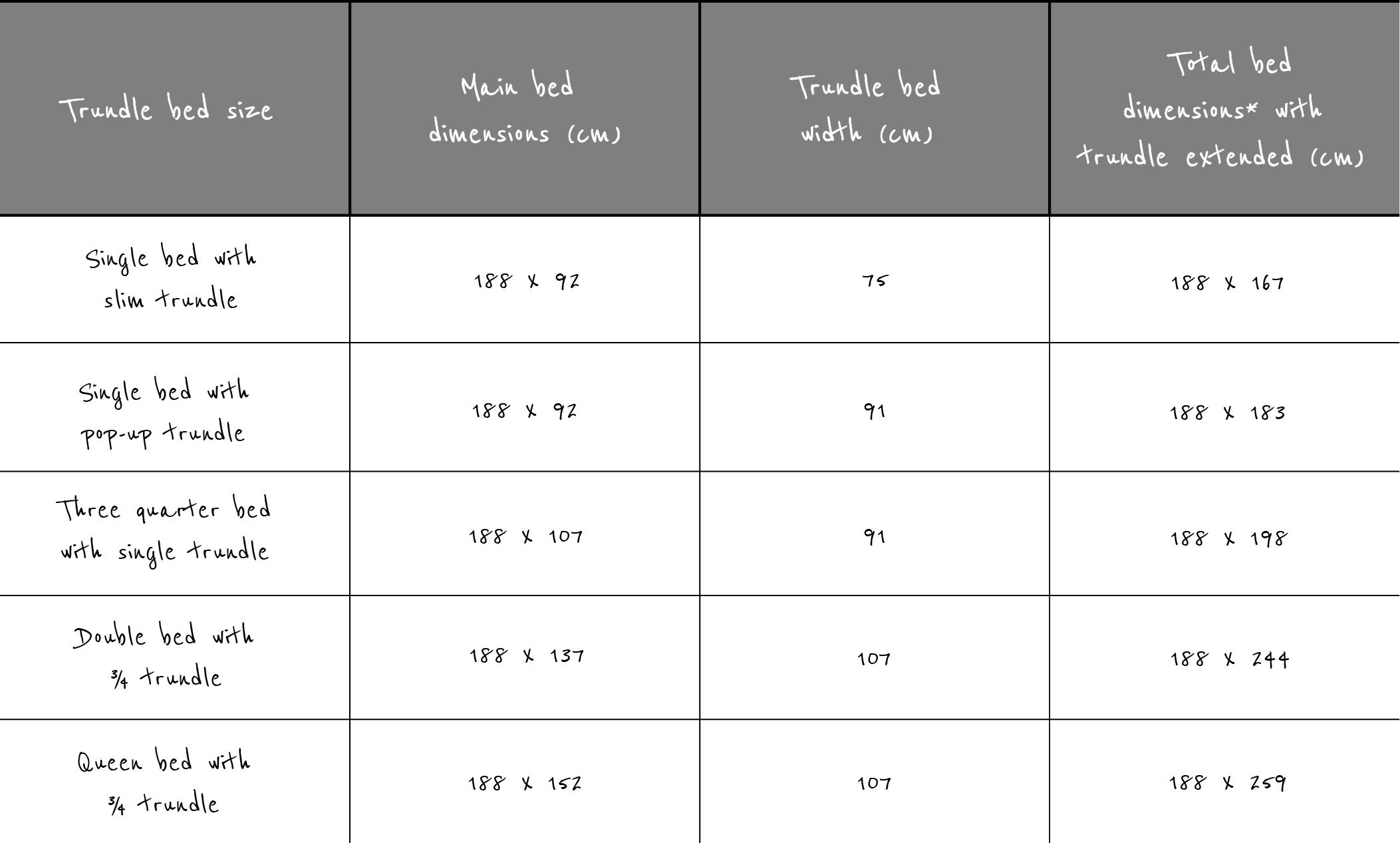
Of course, you’ll need to ensure you have the minimum necessary floor space available, by adding the dimensions of the upper bed, plus the lower trundle when extended. Here is a rough guide on how much floor space you’ll need for a trundle bed:
Dimensions may vary by brand
Any piece of multipurpose furniture comes with its unique list of p’s and c’s. The important thing is having a clear picture of what they are so you can decide if any of the cons are really a dealbreaker, or figure out ahead of time if there’s a workaround you can live with. Ultimately, you’re the only one who can decide if a trundle bed is the right solution for your particular situation.
With that, here’s our complete list of the pros and cons of trundle beds.
Pros:
Trundles away! Where can I buy good quality trundle beds in South Africa?
Now that we’ve answered all the important questions, and covered all the pros and cons, your mission (should you choose to accept it) is to find a quality trundle bed that’s right up your alley in quality, style and price.
Whether you’re shopping online or in-person, be sure to check on a few important details before you swipe:
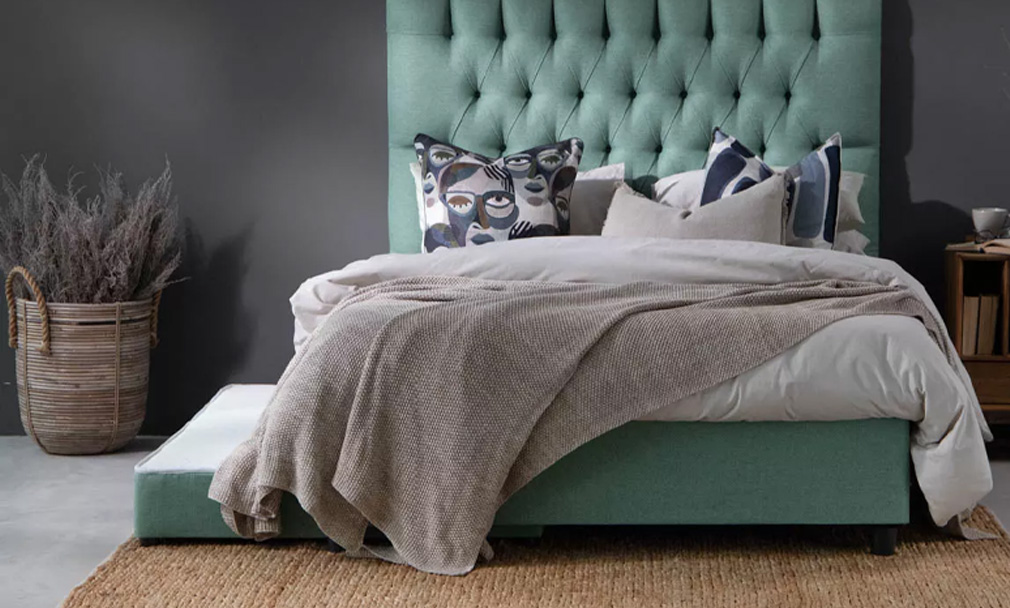
Whether you’re looking for a quality trundle bed for a kid’s bedroom, guest room, holiday home, or anything in between, Cielo offers a beautiful range of dual function beds and daybeds designed to maximise on space and style.
Available in Single, Three-Quarter, Double and Queen size, you can choose from base only options if you want to choose your own mattress and bed frame, or add a complete space-saving solution to any room with our fully kitted contemporary dual bed designs. The choice is yours—visit our online store or pop into your nearest Cielo showroom today.